
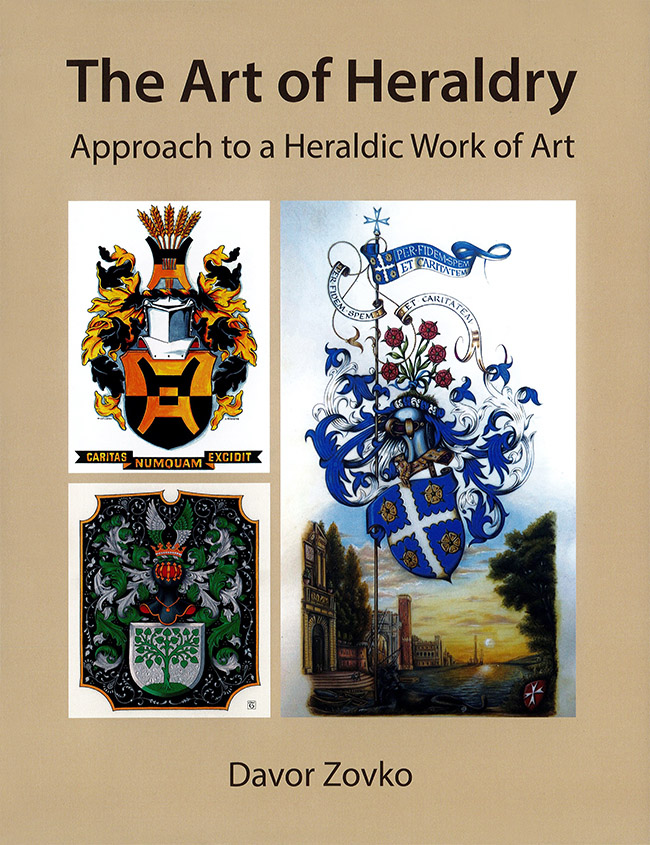
The Art of Heraldry
- Subtitle:Approach to a Heraldic Work of Art
- Publisher:Riksarkivet
- Author:Davor Zovko
- City published:Stockholm
- Year published:2026
- Pages:215
- ISBN:978-91-87491-50-4
- Language:English
Description
Article number: 5175
How is a heraldic work of art actually created? In the Swedish National Archives’ richly illustrated new book "The Art of Heraldry – Approach to a Heraldic Work of Art", the reader is introduced to the artistic principles underlying heraldry.
Line, surface, contrast, and rhythm are some of the elements that heraldic artists work with. The book demonstrates how these fundamental tools are used to enhance expression and aesthetics in heraldic works.
The Swedish National Archives is responsible for one of Sweden’s historical treasures – the system of public heraldry, with roots in the Middle Ages. Heraldry is not only an auxiliary historical discipline, but also an art form created using the same techniques and approaches as other forms of art. The principal motif of heraldry, the coat of arms, gives the art form its distinctive character, just as the human figure defines portraiture or nature defines landscape painting.
The Swedish National Archives welcomes contributions from external actors in the development of public heraldry. A diversity of styles and ideas helps make the symbols of public authorities more distinctive. At the same time, it is essential that heraldic rules are followed and that the artistic quality remains high.
The book serves as an accessible introduction and aims to inspire further knowledge in both heraldry and art. The hope is that it will contribute to the continued development of the state’s visual identity with high artistic standards, ensuring that heraldry remains a living art form.
The author is Davor Zovko, Licentiate of Philosophy, a heraldic artist with many years of experience and serving as State Herald at the Swedish National Archives.